
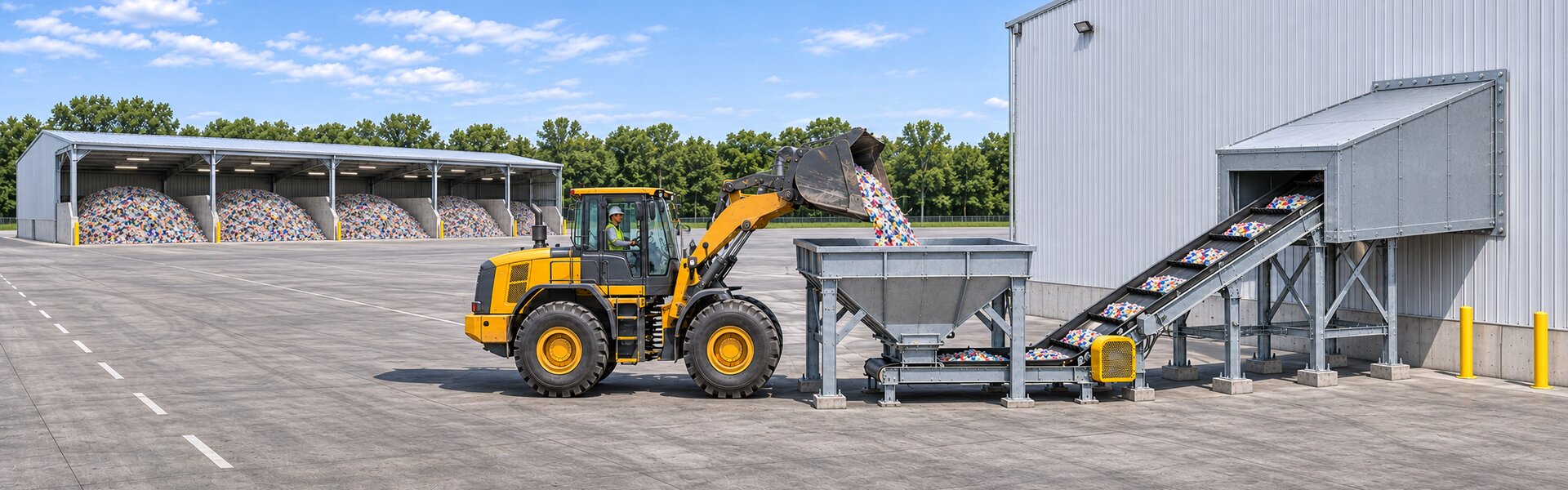
Waste Plastic to Fuel — Ultra-Low-Sulphur Diesel from Scrap
Waste Plastic To Fuel
The plastics mechanical recycling cannot recover — films, mixed grades, contaminated material — are exactly the feedstock pyrolysis was built for.
Every materials recovery facility produces a reject stream: plastic-rich, mixed, dirty, unmarketable mechanically, costly to send away. Add agricultural film, fishing gear, end-of-life packaging, automotive shredder plastics and the plastic fraction of commercial and industrial waste, and the stranded tonnage is enormous. Waste-plastic-to-fuel conversion monetises that material, complementing mechanical recycling rather than competing with it.
The feedstock nobody else wants
Thin film fails on handling and contamination; multi-layer packaging is not one polymer; mixed rigids fail on sortation economics; food residue, labels, adhesives or soil fail on quality; material recycled twice already fails on degraded properties. All of it ends at landfill, incineration without recovery, or export. Thermal conversion is indifferent to most of that: colour, mixed grades, labels and light organic contamination do not prevent cracking. Chlorine and oxygen do matter: PVC and PET must be controlled at the front end, so a realistic project starts with the stream characterised by sampling, not assumption.
Pyrolysis and gasification: two tools, one toolbox
Pyrolysis, without oxygen, produces a condensable hydrocarbon liquid and suits a liquid-fuel or petrochemical-feedstock goal; gasification, with controlled sub-stoichiometric oxygen or steam, produces synthesis gas and suits heterogeneous, high-ash, high-moisture or heavily contaminated residues that would foul a pyrolysis train. On a mixed-waste site they pair: the clean polyolefin fraction goes to pyrolysis for diesel and pyrolysis oil, while fines, rejects, char and non-plastic organics go to gasification and become site energy, raising landfill diversion and improving the plant's energy balance. Klean engineers across both, so selection follows the feedstock, not a vendor's catalogue.
From scrap to ultra-low-sulphur diesel
The target is a clean, ultra-low-sulphur distillate in the diesel range. Polyethylene and polypropylene contain essentially no sulphur, so sulphur in the finished fuel comes from contamination; disciplined feedstock preparation, steady-state continuous liquefaction, catalytic control of cracking and integrated fractional distillation turn that advantage into a product a buyer will test and accept.
The environmental case, stated honestly
Converting waste plastic to fuel diverts material from landfill, displaces crude oil, and recovers energy that would otherwise be buried. The honest qualification: fuel is ultimately combusted, so the carbon advantage comes from displacement and avoided landfill, not sequestration. Routing pyrolysis oil to petrochemical co-processing, where the market supports it, keeps that carbon in the materials economy for another cycle. Klean's carbon intensity management and waste audit work quantifies those outcomes project by project.
Starting properly
The first step is not equipment selection but an energy and waste audit of the streams available, then a feasibility study testing yield, capital cost, operating cost and offtake against verified inputs.
Learn More:
Monetise the Reject Stream You Are Paying to Remove
Films, multi-layer packaging, mixed rigids and contaminated post-consumer plastic all fail mechanical recycling and all cost money to dispose of. Thermal conversion is indifferent to most of what disqualifies them — provided chlorine and oxygen-bearing polymers are controlled at the front end.
Klean Industries audits the actual waste streams, runs the feasibility study, and engineers across both pyrolysis and gasification so the route is chosen on the feedstock's merits — with delivered projects spanning plastic pyrolysis, solid waste and waste-to-energy facilities across North America, Europe and Asia.
Want your reject stream characterised and costed?